


AI and the Future of Aging As global populations age at an unprecedented rate, countries around the world are facing a major challenge: how to provide compassionate, affordable, and scalable care for the elderly. Traditional care systems are under strain due to caregiver shortages, rising costs, and increasing demand. In response, a new wave of technology is emerging—AI-powered virtual companions integrated with emotion recognition systems. These tools are not only transforming the elderly care landscape but also redefining what it means to age with dignity, comfort, and support.
The Evolution of AI-Powered Virtual Companions AI-powered virtual companions are interactive, intelligent systems that simulate human conversation, monitor well-being, and offer a range of services tailored to the needs of elderly individuals. Initially, these systems were simple voice assistants, but modern iterations now incorporate advanced natural language processing (NLP), machine learning, and emotion recognition technologies.
By analyzing facial expressions, vocal tones, physiological signals, and textual sentiment, these virtual companions can detect emotional states such as loneliness, anxiety, happiness, or frustration. The integration of emotion recognition allows them to respond more empathetically and proactively, improving the overall emotional and psychological health of seniors.
Fields of Expansion for AI-Powered Virtual Companions AI virtual companions are rapidly gaining ground in several key sectors, especially those that intersect with elderly care:
Virtual caregivers can remind seniors to take medications, attend appointments, and monitor chronic health conditions.
Emotion recognition helps detect mood disorders or cognitive decline early, facilitating timely medical interventions.
Integration with smart health devices allows continuous health tracking and real-time alert systems.
These companions can control smart home systems (lights, locks, climate control) via voice commands.
Emotion-aware AI can adjust home environments to suit the mood—dim lights for anxiety, uplifting music for sadness.
In emergency scenarios, virtual assistants can detect distress in the voice or body language and immediately contact emergency services.
Mental Health and Emotional Support
Loneliness is a major issue among the elderly. Virtual companions provide ۲۴/۷ conversational interaction.
Emotion recognition allows personalized responses—offering jokes, music, or mindfulness exercises when sadness is detected.
These systems can encourage physical and social activities, improving mood and mental resilience.
Cognitive Training and Entertainment
Virtual companions can offer puzzles, games, and memory exercises to promote cognitive function.
They detect frustration and adjust difficulty levels accordingly.
Storytelling, music recommendations, and reminiscing features based on emotion tracking foster engagement and joy.
AI companions help elderly users maintain social connections by reminding them of calls, birthdays, and sending messages.
Emotion detection can notify family members when emotional distress is detected, strengthening intergenerational support.

What AI Virtual Companions Will Do: Capabilities in Detail AI-powered virtual companions for elderly care are designed to perform a range of intelligent tasks:
Conversational Engagement: Continuous conversation using NLP to simulate natural dialogue, including active listening and empathetic responses.
Health Monitoring: Integration with wearables and home sensors to track vital signs, activity levels, and sleep patterns.
Emotion Recognition: Use of facial and vocal analysis to assess mood and respond appropriately.
Routine Management: Reminders for medication, hydration, appointments, and daily chores.
Safety Monitoring: Detecting signs of falls, distress, or dangerous inactivity using audio or motion cues.
Educational and Recreational Activities: Offering language lessons, quizzes, or story sessions personalized to mood and preference.
Crisis Management: Immediate alerts sent to caregivers or emergency services when emotional or physical distress is detected.
Impact on Elder Care Pricing The introduction of AI-powered virtual companions has a significant impact on the economics of elderly care:
Reduced Human Labor Costs
Virtual companions can perform many tasks currently handled by caregivers, reducing the need for full-time human staff.
This is especially beneficial in countries facing a shortage of trained eldercare professionals.
AI systems are infinitely scalable, meaning more seniors can access care services without additional personnel.
This helps in rural or underserved areas where human care options are limited.
Preventive Healthcare Savings
By detecting emotional and physical health issues early, AI reduces the likelihood of hospitalization.
Preventive care is significantly less expensive than emergency interventions.
Subscription-Based Models
Many AI care systems are available via affordable monthly subscriptions.
This is a cost-effective alternative to in-home care or assisted living facilities, which can be prohibitively expensive.
Family Cost Reductions
Families can avoid the high cost of ۲۴/۷ private care while still ensuring consistent companionship and monitoring.

Challenges and Ethical Considerations While AI-powered virtual companions offer many benefits, several challenges must be addressed:
Data Privacy: Emotional and health data are highly sensitive. Ensuring compliance with GDPR, HIPAA, and other data laws is crucial.
Bias in Emotion Recognition: Algorithms may misinterpret emotions, particularly across different cultures and languages.
Loss of Human Touch: While AI can simulate empathy, it cannot replace genuine human connection. Balance is essential.
Over-Reliance: Seniors may become overly dependent on virtual systems, reducing human interaction and physical activity.
The Future of Elderly Care with Emotion-Aware AI Companions The next decade will see rapid advances in AI capabilities, particularly in the areas of natural empathy and contextual understanding. We can expect:
More Personalized Experiences: Deep learning will allow AI companions to understand unique behavioral patterns and preferences.
Integrated Ecosystems: AI companions will become the central hub in a connected home, integrating with wearable tech, smart appliances, and healthcare portals.
Collaborative AI-Human Care: Rather than replacing human caregivers, AI will augment them—handling routine tasks so professionals can focus on emotional and relational aspects.
Global Standardization: Governments and health systems may incorporate AI companions into formal eldercare programs.
Toward a Compassionate, Technologically-Supported Future AI-powered virtual companions integrated with emotion recognition are not just technological innovations—they represent a paradigm shift in how we approach aging. They empower elderly individuals to live more independently, more connectedly, and more joyfully.
Though challenges exist, the benefits—reduced costs, enhanced emotional well-being, scalable care—make this technology indispensable in modern eldercare. As development continues, the focus must remain on creating systems that prioritize empathy, inclusivity, and respect for the dignity of those they serve.

Understanding AI Virtual Companions: Definition, Function, and Future Impact
Introduction: What Are AI Virtual Companions?
As artificial intelligence (AI) continues to evolve, the concept of AI Virtual Companions has emerged as a transformative innovation. At its core, an AI virtual companion is a software-based entity designed to simulate human-like interaction, provide emotional support, and assist with daily tasks through natural language processing, machine learning, and emotional intelligence. These virtual entities operate via voice, text, holographic projections, or digital avatars and are increasingly being used in sectors such as healthcare, education, customer service, and eldercare.
AI virtual companions are more than just sophisticated chatbots. They are designed not only to converse but also to understand, adapt, and form meaningful interactions with users. The integration of emotion recognition technology has significantly enhanced their capabilities, enabling them to sense the emotional state of users and respond with appropriate empathy and behavior.
Core Definition of AI Virtual Companions
AI Virtual Companions are artificially intelligent systems programmed to engage in ongoing, adaptive, and often emotionally responsive interactions with human users. Unlike traditional assistants that respond only to specific commands, virtual companions are built to maintain dynamic dialogue, offer contextual suggestions, and build long-term relational memory.
These companions are “virtual” because they exist entirely in digital form—on smartphones, computers, wearable devices, or through smart home interfaces. They may be visualized as avatars, holograms, or simply function through voice and text interfaces.
Key Features of AI Virtual Companions
- Conversational Intelligence
At the heart of every AI virtual companion lies the ability to understand and generate natural language. This is made possible by natural language processing (NLP) and understanding (NLU), which allow the system to interpret user input, detect intent, and provide coherent, relevant responses. - Emotional Awareness
Many advanced companions use emotion recognition technology to detect emotional states from voice tone, facial expressions, and text sentiment. This allows them to respond empathetically and offer emotional support or alerts if needed. - Contextual Memory
AI virtual companions can remember past conversations, preferences, and user behavior to tailor interactions. For instance, a virtual companion may remember that a user likes classical music in the morning and suggest it at appropriate times. - Task Assistance
These systems help users with daily tasks like setting reminders, managing calendars, providing medication alerts, or navigating digital environments. In elderly care, they can monitor health parameters and call for help if something goes wrong. - Learning and Adaptation
Through machine learning, AI virtual companions continuously learn from user interactions. They can refine their responses, improve accuracy, and become more intuitive over time.
Types of AI Virtual Companions
AI virtual companions vary in complexity and purpose, and can be grouped into the following categories:
Social Companions: Designed primarily for emotional interaction, conversation, and companionship, especially for elderly users or individuals suffering from loneliness.
Healthcare Companions: Used in hospitals and homes to monitor vital signs, remind patients to take medications, and alert caregivers in emergencies.
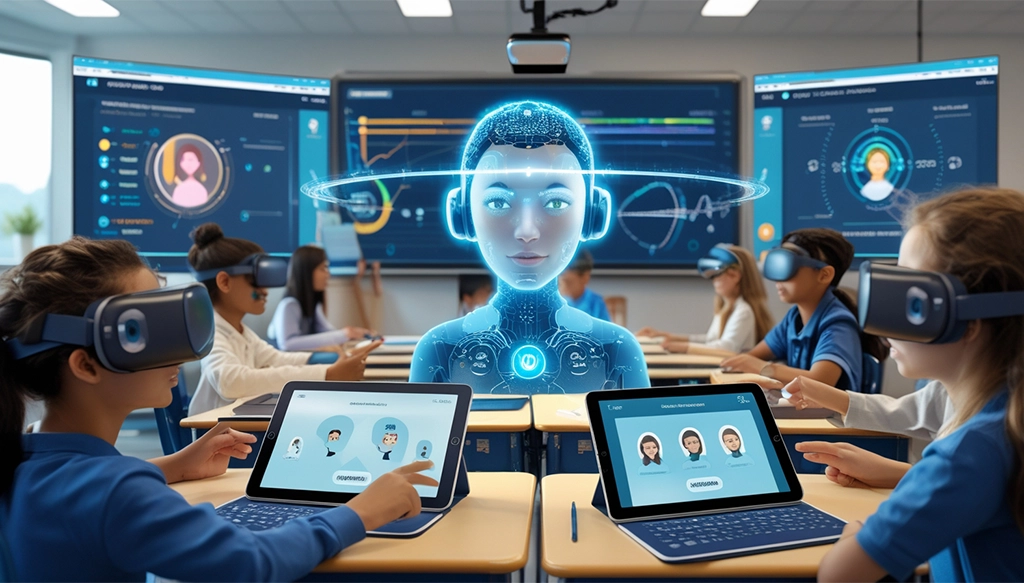
Educational Companions: Help learners with studying by explaining concepts, offering quizzes, or keeping students engaged through personalized feedback.
Productivity Companions: Assist users in professional environments by managing emails, scheduling, and organizing tasks efficiently.
Entertainment Companions: Create immersive experiences by interacting with users in video games, virtual worlds, or smart TVs.
The development of an AI virtual companion involves multiple technological layers:
Artificial Intelligence (AI): The brain behind decision-making, prediction, and adaptation.
Natural Language Processing (NLP): Enables understanding and generation of human language.
Emotion Recognition: Uses audio analysis, facial recognition, and text sentiment analysis to determine mood.
Machine Learning (ML): Facilitates learning from past interactions and improving accuracy.
Speech Recognition and Generation: Powers voice-based interaction.
User Interface Design: Includes visual avatars or text/voice-based interaction models.
For example, a virtual companion designed for elderly care may integrate sensors, microphones, and camera inputs to constantly monitor health and emotional cues, offering proactive assistance based on the collected data.
-
Emotional Support AI virtual companions can serve as constant companions, especially beneficial for people living alone. They engage in conversations, offer entertainment, and even provide motivational feedback. -
Independence for the Elderly Seniors can live more independently with reminders, health tracking, and emergency support handled by AI companions. -
Personalized Interaction Unlike generic virtual assistants, AI companions tailor their responses based on mood, context, and history, resulting in more human-like engagement. -
Mental Health Assistance Some AI companions help users manage anxiety, depression, or stress by offering mindfulness exercises, mood tracking, or cognitive behavioral therapy models. -
Scalability and Availability Unlike human caregivers, AI companions are available ۲۴/۷, can serve millions simultaneously, and scale without geographical constraints.
Despite their advantages, AI virtual companions raise important challenges:
Privacy and Security: Emotion data and personal conversations are highly sensitive and must be protected through strict data regulations.
Emotional Dependence: Users, especially children or the elderly, may develop emotional attachments that replace real human interaction.
Bias and Misinterpretation: AI may misinterpret emotions, especially across different cultures or neurodiverse individuals, leading to inappropriate responses.
Lack of Human Intuition: Despite advancements, virtual companions still lack true human empathy, moral judgment, and intuition.
The next decade promises even more advanced virtual companions, with real-time multimodal emotion recognition, improved contextual understanding, and deeper integration into smart environments. We will likely see:
Emotionally Adaptive Avatars: ۳D virtual beings that exhibit body language, facial expressions, and vocal empathy.
Wearable Integration: Companions that sync with health bands or AR glasses to monitor well-being continuously.
AI-Enhanced Human Roles: Virtual companions that support human caregivers, educators, or therapists—not replace them.
Greater Accessibility: Affordable and multilingual companions reaching underserved populations globally.
In summary, AI Virtual Companions represent a significant leap in the way we interact with machines. With their capacity for language, emotion recognition, task execution, and learning, they are becoming indispensable tools in areas like eldercare, mental wellness, education, and productivity. While they cannot fully replace human connection, their ability to provide consistent, intelligent, and emotionally aware support marks a new chapter in human-machine collaboration. As we refine their design and address ethical challenges, AI virtual companions will continue to evolve into trusted, empathetic partners in our digital lives.

In today’s rapidly evolving professional world, Emotion Recognition—the ability of technology to detect and interpret human emotions using artificial intelligence (AI)—is no longer a futuristic concept. It is becoming a critical tool across multiple sectors, enabling teams and leaders to better understand clients, colleagues, and users. Whether you are in customer service, product development, education, healthcare, marketing, or software engineering, integrating emotion recognition into your work c…
This essay explores how emotion recognition can be applied to various professional environments to enhance productivity, improve interpersonal communication, increase customer satisfaction, and drive innovation in product and service development.
Emotion recognition uses AI to analyze facial expressions, voice tone, written language, physiological signals, or behavioral patterns to determine an individual’s emotional state. Technologies involved include:
Facial Expression Analysis (via computer vision)
Speech Emotion Recognition (via voice analytics)
Text Sentiment Analysis (via natural language processing)
Biometric Monitoring (via wearables)
With the integration of such technologies into workplace tools, professionals can tap into real-time emotional feedback to improve how they design, deliver, and support their work.
If you work in customer service, user support, or sales, emotion recognition can be a game changer.
- Real-Time Sentiment Analysis
Customer calls, live chats, or video consultations can be enhanced with emotion detection that interprets tone, pitch, and word choice. If a customer is detected as frustrated, the system can automatically escalate the issue to a senior agent or offer calming prompts to the support rep.
- Intelligent Chatbots
Emotionally aware chatbots can detect if a user is angry, sad, or satisfied and adjust their language and flow accordingly—offering empathy or humor where needed. This builds stronger emotional connections with customers, increasing retention and brand trust.
- Sales Optimization
In a sales environment, emotion recognition tools during calls or meetings can help detect buying signals or objections in real-time. Sales reps can adjust their pitch based on emotional cues, resulting in better close rates.
As a manager, team leader, or HR professional, understanding the emotional dynamics within your team is vital.
- Team Mood Tracking
Emotion recognition tools embedded in video conferencing platforms or work dashboards can provide aggregate emotional feedback—detecting signs of burnout, disengagement, or stress. This allows you to intervene early and improve team morale.
- Emotional Feedback During Reviews
During employee evaluations, AI systems can help managers better understand an employee’s non-verbal reactions. Conversely, employees can use emotional cues from management to tailor their responses or clarify misunderstandings.
- Onboarding and Training
Emotion-aware learning platforms can adjust content delivery based on learner engagement and mood. For example, if a trainee looks confused, the system can automatically slow down or repeat instructions. This ensures higher retention and satisfaction.
If you’re a developer, designer, or UX/UI expert, emotion recognition offers new dimensions for crafting user-centered experiences.
- UX Testing with Emotion Analytics
Instead of relying solely on user surveys, emotion recognition can track users’ emotional reactions while interacting with your app or website. You can identify moments of frustration, confusion, or delight, and optimize the interface accordingly.
- Emotion-Aware Applications
You can build apps that respond to users’ emotions. For instance:
Meditation apps adjusting based on stress levels.
E-learning platforms that pause when boredom is detected.
Games that adapt difficulty based on frustration or excitement.
- Inclusive Design
Emotion recognition can highlight when certain designs are misinterpreted or provoke negative responses in specific user groups, allowing you to create more inclusive and accessible products.
In healthcare-related fields, emotion recognition adds another layer of patient insight.
- Remote Patient Monitoring
Telehealth platforms can analyze a patient’s facial expression and voice to detect anxiety, depression, or confusion—especially helpful for diagnosing mental health conditions or monitoring recovery.
- Therapy Enhancement
In digital therapy tools, emotion recognition can give therapists real-time insights into their clients’ emotions, even when not explicitly expressed. This improves therapeutic accuracy and engagement.
- Wellness Apps
Apps that track stress, sleep, or heart rate can integrate emotion recognition to offer customized mindfulness exercises, send alerts, or recommend rest based on emotional patterns.
If you’re in marketing, content creation, or advertising, emotion recognition offers powerful personalization capabilities.
- Content Testing
Emotion detection tools can measure viewer reactions (facial expression, voice, eye movement) to advertisements, videos, or web pages. This allows marketers to fine-tune messaging before large-scale rollouts.
- Personalized Campaigns
Emotion-aware marketing platforms can segment users based on mood and deliver personalized emails, social media content, or product recommendations that match their current emotional state.
- Social Listening
Through sentiment analysis, brands can detect emotional trends from customer reviews or social media posts. This insight helps guide brand messaging and crisis management.
While emotion recognition offers many benefits, it must be implemented ethically and responsibly. Here are best practices:
Obtain Informed Consent: Users and employees must know when and how their emotional data is being used.
Data Anonymization: Emotional data should be anonymized and protected to avoid misuse.
Avoid Manipulation: Emotion recognition should support, not exploit, emotional states.
Train with Diverse Data: Avoid biases by using datasets that reflect different genders, cultures, and neurodiverse conditions.
Human in the Loop: Final decisions—especially in sensitive contexts—should not be left to AI alone.
Emotion recognition is reshaping the modern workplace. Whether used to connect better with customers, improve employee well-being, build smarter products, or tailor content, it empowers professionals to be more responsive and empathetic. The key to successful integration is purposeful and ethical design—using emotion detection to enhance human connection, not replace it.
By understanding how and when to apply emotion recognition in your work, you can unlock deeper insights, more meaningful interactions, and smarter outcomes—making your development process more human-focused in a world increasingly run by machines.









Leave a Reply