


In the ever-evolving digital economy, customer expectations have dramatically changed. People no longer want just solutions—they want empathy, understanding, and personalized care. With the rise of Emotion Recognition powered by AI, businesses are now able to meet this demand. Emotion recognition through voice technology allows machines to detect customer feelings based on speech cues, providing real-time emotional awareness that transforms how service is delivered.
Voice and emotion recognition AI systems go beyond simply recognizing words. They detect frustration, happiness, anger, fear, or satisfaction using machine learning and affective computing. These capabilities open up new possibilities for businesses, such as dynamically routing calls to skilled agents, generating empathetic automated replies, and offering real-time coaching to human agents.
In this essay, we’ll explore the key technologies, applications, benefits, ethical issues, and the future of voice-based emotion recognition in customer service, and how it’s becoming one of the most powerful tools in building better brand experiences.
Emotion recognition refers to the technology that identifies human emotions from various data inputs, including facial expressions, physiological signals, text sentiment, and voice tone. In customer service, the primary focus is voice-based emotion recognition, where systems decode emotional states from speech signals.
Key Voice Features Used:
Pitch and Tone: A rise in pitch may signal excitement or frustration.
Speech Rate: Rapid speech may indicate anger or anxiety.
Volume & Loudness: Raised voice levels often point to agitation.
Pause Duration: Long pauses may signal hesitation or confusion.

Emotion Recognition Applications in Customer Service
- Real-Time Sentiment Detection
AI identifies a customer’s emotional state mid-conversation. If frustration or anger is detected, calls can be escalated or routed to senior agents instantly.
- Smart Call Routing
Systems can direct a sad customer to a patient agent or a happy customer to someone trained in upselling—making emotional context part of the workflow.
Agent Training and Feedback
AI provides emotion-based coaching, suggesting agents slow down, use empathetic language, or offer reassurance when emotional shifts are detected.
- Virtual Agents with Empathy
Emotionally aware chatbots can change tone and behavior based on customer mood, offering more human-like experiences.
- Automated Post-Call Analysis
Rather than rely solely on surveys, AI evaluates the entire call for stress, sentiment shift, and customer satisfaction.
Advantages of Emotion Recognition in Customer Support
- Enhanced Empathy and Personalization
AI systems respond to human feelings, making customers feel heard and valued. This builds trust and loyalty.
- Higher Customer Satisfaction
Fewer unresolved issues, faster escalation, and empathetic communication improve CSAT scores.
- Reduced Call Handling Time
Emotion cues help agents solve problems faster, aided by AI suggestions.
- Lower Churn and Retention Boost
When customers feel emotionally understood, they are less likely to leave.
Real-Time Insights for Leadership
Managers receive emotional trend reports, enabling faster decisions and service improvements.
Real-World Implementations of Voice-Based Emotion Recognition
Cogito AI
Used by companies like MetLife, Cogito offers live emotion feedback during calls. It increases agent awareness and customer engagement.
Amazon Connect with AWS Contact Lens
This system uses AI to detect sentiment and highlight high-risk calls. It helps companies like Ring and Liberty Mutual reduce churn.
IBM Watson Tone Analyzer
Helps brands assess tone in both speech and text, offering detailed emotional summaries post-call.
NICE Enlighten AI
Monitors agent tone and empathy. Provides real-time coaching prompts to improve conversation outcomes.
Ethical and Privacy Concerns
- Lack of Transparency
Many users are unaware they’re being emotionally analyzed. This violates basic consent principles.
- Potential for Manipulation
Businesses might exploit emotions to push sales or influence behavior without consent.
- Bias and Misinterpretation
AI systems trained on limited datasets may misinterpret emotional tone across different accents, genders, or languages.
- Security Risks
Voice data is sensitive and must be protected under laws like GDPR and CCPA.
- Loss of Human Touch
Over-automation risks alienating customers who prefer real human empathy over simulated responses.

Challenges in Emotion Recognition AI Deployment
- Language and Cultural Nuance
Different cultures express emotions differently. AI must learn contextual nuances to avoid false interpretations.
- Background Noise and Quality
Poor audio or multi-speaker environments confuse emotion detection systems.
- Subtle Emotions and Mixed Feelings
Humans often mask their feelings, or express multiple emotions. This complexity is hard for AI to decode accurately.
- Real-Time Processing Demand
Analyzing emotion in live calls requires fast, powerful, and reliable systems, which can be resource-intensive.
- Lack of Standardization
There’s no global benchmark for emotion categories, making training and deployment fragmented.
The Future of Voice and Emotion Recognition in Customer Support
- Multimodal Emotion AI
Combining voice with facial, gesture, and physiological inputs for fuller emotional profiles.
- AI Emotional Coaching
Live coaching not just for agents but for customers—helping manage emotions during tense support moments.
- Emotion-Based CRM Integration
Emotional profiles will be stored in CRM, helping sales and support teams understand past moods and interactions.
- On-Device Emotion Detection
Privacy-focused emotion recognition processed locally on devices rather than the cloud.
- Emotion Ethics Standards
As the tech grows, we’ll see frameworks developed to regulate how and when emotion recognition can be used.
Emotion recognition is no longer science fiction—it’s a growing part of the AI toolkit that’s reshaping customer service. By detecting human emotions through voice, companies can deliver faster, more empathetic, and effective support.
It is a win-win: customers feel valued and understood, while businesses benefit from better retention, efficiency, and insights.
However, the success of this technology depends not just on innovation, but on responsible deployment. That means being transparent, ethical, culturally aware, and focused on the human experience. If done right, emotion recognition AI will become the emotional brain of customer service in the next digital age.

As artificial intelligence (AI) evolves, machines are gaining the ability not just to understand what we say, but how we feel when we say it. Emotion detection technology—the capability of machines to interpret human emotions through facial expressions, voice tone, physiological signals, or text sentiment—has entered our lives in surprising and often invisible ways. From classrooms and workplaces to smartphones and social media apps, systems are now able to “read” emotions and adapt responses acco…
On the surface, this seems like a leap toward more human-centered machines—empathetic AI that responds with understanding and compassion. But beneath the convenience lies a complex and increasingly controversial question: Is emotion detection technology dangerous for the new generation?
This essay explores the risks, ethical implications, and psychological effects of emotion detection AI on children, teenagers, and young adults, asking whether this innovation is truly helpful—or potentially harmful.
Understanding Emotion Detection Technology
Emotion detection technology uses artificial intelligence to analyze behavioral and physiological cues in order to determine a person’s emotional state. This includes:
Voice Emotion Analysis: Recognizing anger, happiness, fear, or stress through speech tone, volume, and rhythm.
Facial Recognition: Detecting emotional expressions using computer vision.
Text Sentiment Analysis: Understanding emotion in typed messages or posts.
Biometric Feedback: Analyzing heart rate, pupil dilation, and skin conductance via wearables.
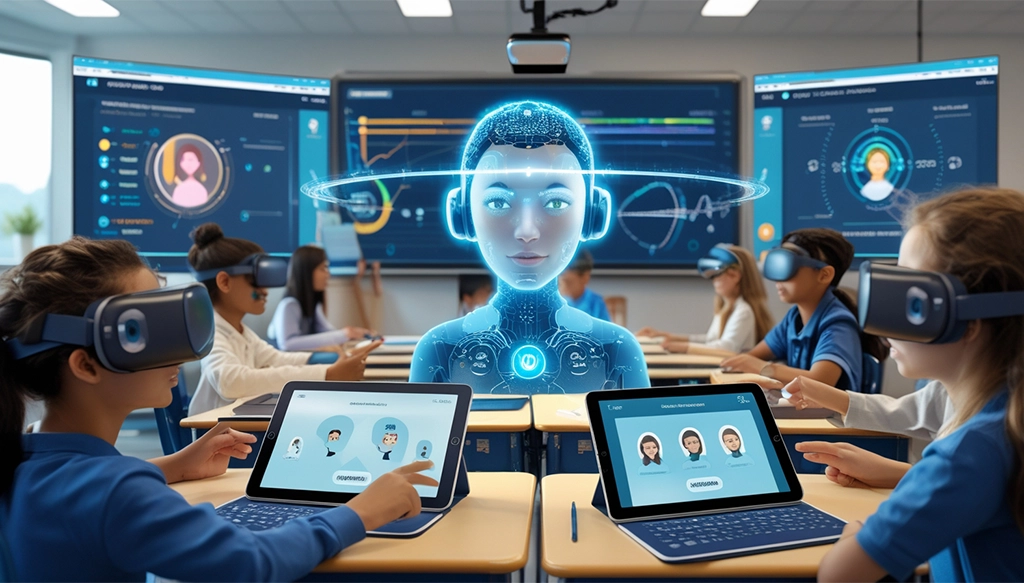
These systems are used in various industries: marketing (to optimize ads), education (to track student engagement), gaming (to create adaptive experiences), and law enforcement (to assess truthfulness). However, their growing use in apps, toys, classrooms, and even smart homes raises serious questions about children’s data rights, mental health, and freedom of emotional expression.
One of the biggest concerns about emotion detection is its potential to distort how young people experience, understand, and express their emotions.
Emotional Surveillance
When children and teenagers grow up knowing their facial expressions, voice tone, or body language might be analyzed by a machine, they may begin to self-monitor excessively. This kind of emotional surveillance can lead to:
Performance anxiety: Feeling the need to always look “happy” or “engaged”.
Suppression of genuine emotions: Avoiding expressions of sadness, anger, or frustration.
Loss of privacy in inner life: A feeling that even their moods are no longer their own.
Over time, this may result in emotional fatigue, lowered self-esteem, or detachment from authentic feelings. The sense of always being watched—even by a machine—can create an internalized pressure to conform emotionally.
Emotional Labeling and Identity Formation
Young people are still learning to define their emotional identities. If an app or device regularly tells them they’re “angry” or “disengaged” based on algorithms, it can interfere with how they understand themselves.
Over-simplification of emotion: AI often categorizes feelings into a few basic types, ignoring the nuance and complexity of real human emotion.
External validation: Relying on devices to tell them how they feel, instead of developing internal emotional awareness.
Emotional stereotypes: Mislabeling emotions based on cultural or racial bias in training data.
This is particularly dangerous during adolescence—a stage when emotional self-regulation and identity development are critical. Mislabeling emotions, or providing feedback that contradicts self-perception, can lead to confusion, dependence, or emotional dissonance.
Data Privacy and Consent Concerns
Children and teens are the most vulnerable users of technology when it comes to data protection. Emotion detection systems often rely on collecting large amounts of biometric and behavioral data, such as voice recordings, facial scans, and movement patterns. The dangers include:
Informed Consent Is Rarely Given
In many cases, young users are unaware that their emotions are being monitored, especially in:
Online education platforms
Toys with cameras/microphones
Social media algorithms
Wearables or health apps
Consent is often buried in terms of service agreements or given by parents without full understanding. This lack of transparency violates basic digital rights.
Unlike passwords or usernames, emotional data is highly personal and hard to change. If companies store emotional responses and link them to a person’s digital identity, this creates long-term emotional profiles that could be used for:
Manipulative advertising (e.g., targeting teens when they’re sad)
Insurance or education discrimination
A generation raised with permanent emotional records could lose control over their emotional privacy—and potentially be judged not for what they did, but for how they felt.
Bias and Misinterpretation
Emotion recognition systems are trained on data, and data reflects the world—often in biased ways. Studies have shown that many emotion AI systems:
Perform better on white male faces than on women or people of color.
Mislabel expressions from different cultures (e.g., confusing concentration for anger).
Struggle with neurodiverse individuals whose expressions deviate from the norm.
For the new generation, especially those from marginalized or underrepresented groups, this means that emotion detection may misjudge them—leading to false assumptions, discrimination, or social isolation.
Imagine a student being flagged as “disengaged” by AI during an online class simply because they process information differently. Or a young person from a minority background being labeled “aggressive” because the training data didn’t include their cultural expression of assertiveness. These mistakes can have real consequences in education, law, and health.
Behavioral Manipulation and Emotional Exploitation
Emotion detection opens the door to a subtle form of behavioral control.
Personalized Manipulation
When algorithms understand how someone feels, they can be programmed to push specific content, offers, or choices at vulnerable moments.
Sending addictive content when a teen feels lonely.
Targeting a teenager with food delivery ads when they’re sad.
Promoting shopping during emotional lows.
This emotionally aware marketing is highly effective—and deeply invasive.
Emotional Feedback Loops
Emotion-aware apps can create a feedback loop that reinforces certain behaviors. If a wearable device rewards calmness and penalizes agitation, a child may try to “game” the system instead of learning authentic emotional regulation.
While the goal may be positive (improving mental health), the unintended consequence is emotional conformity—rewarding predictable feelings and punishing emotional diversity.
Ethical Questions and Future Dilemmas
The implementation of emotion detection on a mass scale raises critical ethical questions:
Should children be subject to emotional monitoring by default?
Who decides what emotions are “good” or “bad”?
Should schools or companies be allowed to track emotions without full consent?
Who owns emotional data—and can it be deleted?
The danger isn’t just misuse—it’s that we haven’t decided as a society what “appropriate use” looks like. As companies race to implement emotion detection in products for the youth market, regulation often lags behind.
Emotion detection AI offers undeniable promise—helping us understand ourselves and others more deeply. In customer service, healthcare, and even education, it may play a positive role. But for the new generation, it introduces a double-edged sword: more awareness, but also more surveillance; more personalized experiences, but also more manipulation.
The technology itself isn’t inherently evil, but its unchecked, opaque, and biased use presents a serious risk to children’s emotional development, privacy, and autonomy.
To make this powerful tool safe, we need:
Strict ethical guidelines for its use in education, healthcare, and consumer apps.
Child-specific protections under global data laws (e.g., GDPR, COPPA).
Transparent consent policies, written in accessible language.
Bias audits and diverse training datasets.
Emphasis on human interpretation, not full automation of emotional decisions.
The answer is not to ban emotion detection—but to treat it with the caution and gravity it deserves. The emotional lives of the next generation are too important to hand over to machines without thinking twice.

In today’s rapidly evolving professional world, Emotion Recognition—the ability of technology to detect and interpret human emotions using artificial intelligence (AI)—is no longer a futuristic concept. It is becoming a critical tool across multiple sectors, enabling teams and leaders to better understand clients, colleagues, and users. Whether you are in customer service, product development, education, healthcare, marketing, or software engineering, integrating emotion recognition into your work c…
This essay explores how emotion recognition can be applied to various professional environments to enhance productivity, improve interpersonal communication, increase customer satisfaction, and drive innovation in product and service development.
Emotion recognition uses AI to analyze facial expressions, voice tone, written language, physiological signals, or behavioral patterns to determine an individual’s emotional state. Technologies involved include:
Facial Expression Analysis (via computer vision)
Speech Emotion Recognition (via voice analytics)
Text Sentiment Analysis (via natural language processing)
Biometric Monitoring (via wearables)
With the integration of such technologies into workplace tools, professionals can tap into real-time emotional feedback to improve how they design, deliver, and support their work.
If you work in customer service, user support, or sales, emotion recognition can be a game changer.
- Real-Time Sentiment Analysis
Customer calls, live chats, or video consultations can be enhanced with emotion detection that interprets tone, pitch, and word choice. If a customer is detected as frustrated, the system can automatically escalate the issue to a senior agent or offer calming prompts to the support rep.
- Intelligent Chatbots
Emotionally aware chatbots can detect if a user is angry, sad, or satisfied and adjust their language and flow accordingly—offering empathy or humor where needed. This builds stronger emotional connections with customers, increasing retention and brand trust.
- Sales Optimization
In a sales environment, emotion recognition tools during calls or meetings can help detect buying signals or objections in real-time. Sales reps can adjust their pitch based on emotional cues, resulting in better close rates.
As a manager, team leader, or HR professional, understanding the emotional dynamics within your team is vital.
- Team Mood Tracking
Emotion recognition tools embedded in video conferencing platforms or work dashboards can provide aggregate emotional feedback—detecting signs of burnout, disengagement, or stress. This allows you to intervene early and improve team morale.
- Emotional Feedback During Reviews
During employee evaluations, AI systems can help managers better understand an employee’s non-verbal reactions. Conversely, employees can use emotional cues from management to tailor their responses or clarify misunderstandings.
- Onboarding and Training
Emotion-aware learning platforms can adjust content delivery based on learner engagement and mood. For example, if a trainee looks confused, the system can automatically slow down or repeat instructions. This ensures higher retention and satisfaction.
If you’re a developer, designer, or UX/UI expert, emotion recognition offers new dimensions for crafting user-centered experiences.
- UX Testing with Emotion Analytics
Instead of relying solely on user surveys, emotion recognition can track users’ emotional reactions while interacting with your app or website. You can identify moments of frustration, confusion, or delight, and optimize the interface accordingly.
- Emotion-Aware Applications
You can build apps that respond to users’ emotions. For instance:
Meditation apps adjusting based on stress levels.
E-learning platforms that pause when boredom is detected.
Games that adapt difficulty based on frustration or excitement.
- Inclusive Design
Emotion recognition can highlight when certain designs are misinterpreted or provoke negative responses in specific user groups, allowing you to create more inclusive and accessible products.
In healthcare-related fields, emotion recognition adds another layer of patient insight.
- Remote Patient Monitoring
Telehealth platforms can analyze a patient’s facial expression and voice to detect anxiety, depression, or confusion—especially helpful for diagnosing mental health conditions or monitoring recovery.
- Therapy Enhancement
In digital therapy tools, emotion recognition can give therapists real-time insights into their clients’ emotions, even when not explicitly expressed. This improves therapeutic accuracy and engagement.
- Wellness Apps
Apps that track stress, sleep, or heart rate can integrate emotion recognition to offer customized mindfulness exercises, send alerts, or recommend rest based on emotional patterns.
If you’re in marketing, content creation, or advertising, emotion recognition offers powerful personalization capabilities.
- Content Testing
Emotion detection tools can measure viewer reactions (facial expression, voice, eye movement) to advertisements, videos, or web pages. This allows marketers to fine-tune messaging before large-scale rollouts.
- Personalized Campaigns
Emotion-aware marketing platforms can segment users based on mood and deliver personalized emails, social media content, or product recommendations that match their current emotional state.
- Social Listening
Through sentiment analysis, brands can detect emotional trends from customer reviews or social media posts. This insight helps guide brand messaging and crisis management.
While emotion recognition offers many benefits, it must be implemented ethically and responsibly. Here are best practices:
Obtain Informed Consent: Users and employees must know when and how their emotional data is being used.
Data Anonymization: Emotional data should be anonymized and protected to avoid misuse.
Avoid Manipulation: Emotion recognition should support, not exploit, emotional states.
Train with Diverse Data: Avoid biases by using datasets that reflect different genders, cultures, and neurodiverse conditions.
Human in the Loop: Final decisions—especially in sensitive contexts—should not be left to AI alone.
Emotion recognition is reshaping the modern workplace. Whether used to connect better with customers, improve employee well-being, build smarter products, or tailor content, it empowers professionals to be more responsive and empathetic. The key to successful integration is purposeful and ethical design—using emotion detection to enhance human connection, not replace it.
By understanding how and when to apply emotion recognition in your work, you can unlock deeper insights, more meaningful interactions, and smarter outcomes—making your development process more human-focused in a world increasingly run by machines.









Leave a Reply