

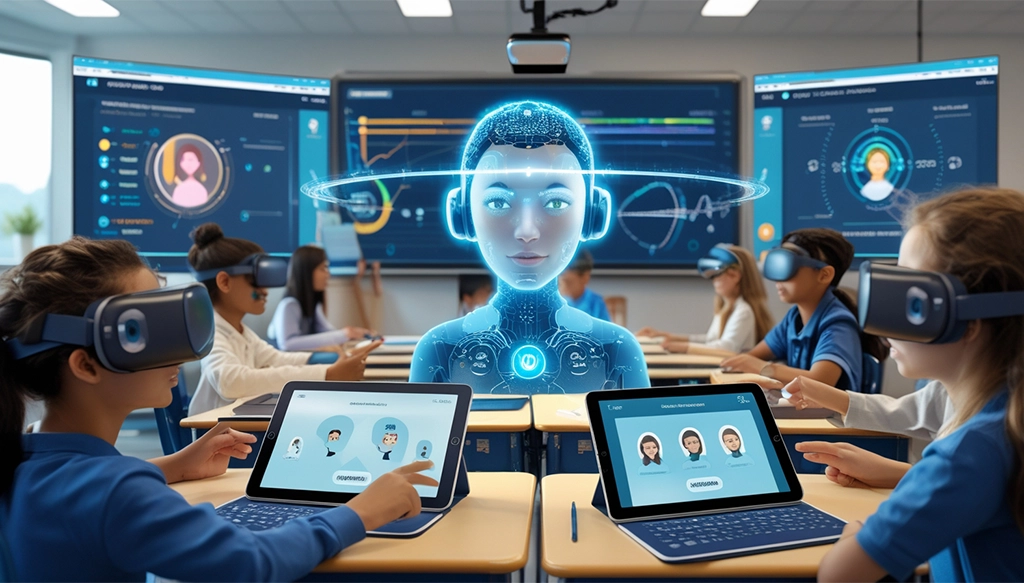
The Future of AI in Education
The future of AI promises transformative changes in many sectors, with education poised to benefit immensely. Personalized education—tailoring learning experiences to individual students’ needs, preferences, and pace—has long been a goal for educators worldwide. With advances in artificial intelligence (AI), this vision is becoming increasingly attainable. AI technologies enable deep customization, adaptive learning paths, and real-time feedback, creating dynamic and effective educational environments.
This essay explores the future of AI in personalized education, highlighting which AI technologies will see growth, how they will be applied in different fields within education, and the impact on the cost and accessibility of personalized learning. Emphasis will be placed on the integration of emotion recognition, adaptive learning algorithms, natural language processing, and predictive analytics.
Before diving into the future, it’s important to understand the current use of AI in education. Today, AI powers intelligent tutoring systems, automated grading, chatbots, and content recommendation engines. These systems provide a glimpse of personalized education by analyzing student data such as performance, learning speed, and preferences.
However, these early-stage systems often lack deep emotional and contextual awareness, which is crucial for truly personalized and effective education. As AI technologies advance, especially in emotion recognition and multimodal learning analysis, the future of AI in personalized education will be far more sophisticated and human-centric.

Application of AI in Different Personalized Education Fields
K-۱۲ Education
In primary and secondary schools, AI will revolutionize how teachers assess and support students. Emotion recognition systems will alert educators when students are disengaged or stressed, prompting timely interventions. Adaptive learning platforms will replace traditional textbooks, offering individualized lesson plans. AI chatbots will assist with homework and provide personalized explanations outside classroom hours.
Higher Education
Colleges and universities will use AI to personalize curricula based on student career goals and competencies. Emotion-aware virtual advisors will guide course selections and mental health support. AI-driven grading will allow professors more time for mentorship and research. Predictive analytics will monitor student progress, recommending tutoring or supplementary courses to improve retention.
Vocational and Corporate Training
AI will transform workforce training by customizing modules according to employee skill levels and learning speed. Virtual coaches using emotion recognition will provide real-time feedback during training simulations. This will reduce training time and increase effectiveness.
Special Education
AI-powered personalized learning holds enormous promise for students with disabilities. Emotion recognition will help identify frustration or anxiety that may hinder learning, allowing systems to adjust accordingly. Speech recognition and NLP will assist students with communication difficulties.
What Will AI-Powered Personalized Education Systems Do?
Deliver Customized Learning Paths: Using student data and emotional cues, AI systems will create unique lesson plans tailored to individual strengths and weaknesses.
Provide Real-Time Feedback and Support: AI tutors will monitor understanding and engagement, offering immediate clarification or encouragement.
Facilitate Emotional Well-being: Emotion recognition allows AI to detect stress, frustration, or disengagement, prompting calming exercises or breaks.
Enable Lifelong Learning: AI-driven platforms will support continuous education beyond formal schooling, adapting to career changes and personal interests.
Augment Human Educators: Rather than replace teachers, AI will assist them by automating routine tasks, providing insights, and enabling focused personalized instruction.
Encourage Collaborative Learning: AI can form study groups by matching students with complementary skills and compatible emotional states.

Increased Accessibility and Affordability
While personalized education has traditionally been expensive and limited to privileged groups, AI technologies promise to democratize access. By automating tutoring and reducing the need for one-on-one human instructors, AI lowers costs significantly.
Subscription-based AI learning platforms can provide personalized tutoring at a fraction of the price of private tutors or elite schools. This will open doors to personalized education in underserved and rural areas.
Reduced Costs for Educational Institutions
Schools and universities will save money on grading, administration, and student support services by integrating AI. These savings could be redirected toward improving infrastructure and teacher training.
The initial development and deployment of sophisticated AI systems may be costly, potentially limiting early access to wealthy institutions. However, as technologies mature and scale, prices are expected to decrease.
Privacy and ethical compliance costs may add to operational expenses, but these are necessary for responsible AI use.
Future Models of Payment
Personalized education through AI may shift from traditional tuition models to subscription or “learning-as-a-service” platforms, offering flexible, pay-as-you-go options.
Government subsidies or partnerships could support equitable access to AI-powered education.
The Future of AI is Personalized Education
The future of AI in personalized education is bright and transformative. AI technologies such as emotion recognition, adaptive algorithms, NLP, predictive analytics, and immersive virtual environments will enable truly individualized learning experiences that respond to the intellectual and emotional needs of students.
This evolution will increase accessibility, reduce costs, and empower educators and learners worldwide. However, responsible deployment with attention to privacy, ethics, and inclusivity remains paramount.
As AI continues to advance, it will not only shape how students learn but also who gets to learn, helping to bridge educational divides and unlock human potential at an unprecedented scale.

The Future of AI in Personalized Education
Introduction: Personalized Learning in the Age of AI In the modern era of technology-driven transformation, artificial intelligence (AI) is rapidly redefining the boundaries of education. Traditional classroom models, characterized by one-size-fits-all approaches, are increasingly being replaced by AI in personalized education systems. These systems adapt to the needs, preferences, pace, and emotional state of each learner, delivering more effective and meaningful learning experiences.
To understand this revolution fully, it is helpful to consider the “crops”—the outcomes or benefits yielded by AI in personalized education—and the “props”—the tools, technologies, and methodologies that support this ecosystem.
۱. The Crops – What AI Delivers in Personalized Education
۱.۱ Custom Learning Paths for Every Learner One of the greatest advantages of AI in personalized education is its ability to analyze large volumes of learner data and construct customized learning paths. These paths adjust to a student’s strengths, weaknesses, pace, and style of learning.
۱.۲ Real-Time Feedback and Intervention AI tutors and learning platforms within AI in personalized education environments provide instant feedback, identifying mistakes or misunderstandings as they occur. This real-time feedback loop allows learners to correct themselves immediately, reinforcing understanding.
۱.۳ Improved Student Engagement and Retention With emotion recognition and behavioral analysis tools, AI in personalized education can detect disengagement or frustration and adjust the lesson style accordingly, improving retention and lowering dropout rates.
۱.۴ Inclusive Learning for Diverse Populations AI in personalized education supports inclusivity by accommodating learners with disabilities or special needs. Whether it’s dyslexia, autism, or language barriers, AI systems adjust content delivery accordingly.
۱.۵ Lifelong Learning and Skills Development AI in personalized education isn’t confined to youth—it supports adult learners as well, enabling ongoing reskilling and upskilling throughout life.
۲. The Props – Technologies Powering AI in Education
۲.۱ Adaptive Learning Algorithms At the heart of AI in personalized education are adaptive learning algorithms. These analyze student interactions and modify lessons in real time.
۲.۲ Natural Language Processing (NLP) NLP helps AI in personalized education platforms understand and respond to student queries naturally, allowing for human-like interaction.
۲.۳ Emotion Recognition and Sentiment Analysis AI systems in AI in personalized education detect emotional states via facial, vocal, or textual cues, enabling systems to provide empathetic feedback or suggest breaks.
۲.۴ Predictive Analytics Using past data, predictive tools in AI in personalized education forecast student success, helping educators proactively intervene.
۲.۵ Conversational AI and Chatbots AI chatbots used in AI in personalized education systems provide round-the-clock support, reducing dependency on human tutors.
۲.۶ Virtual and Augmented Reality AI Immersive VR/AR tools powered by AI provide experiential learning that adjusts based on performance, a hallmark of AI in personalized education.
۲.۷ Learning Management Systems (LMS) with AI Modern LMS platforms with embedded AI features automate routine administrative tasks and enhance customization in AI in personalized education.
۳. Application of AI in Different Personalized Education Fields
K-۱۲ Education In schools, AI in personalized education changes assessment and support. Emotion-aware systems prompt timely interventions, and adaptive platforms replace traditional textbooks.
Higher Education Universities use AI in personalized education to tailor curricula, track performance, and enhance student support via predictive and emotion-aware tools.
Vocational and Corporate Training Workplace training adapts through AI in personalized education systems using virtual coaches and real-time emotion recognition to improve outcomes.
Special Education AI in personalized education is invaluable for special education, adjusting to emotional and cognitive needs for more inclusive learning.
۴. Cost Impacts of AI in Personalized Education
۴.۱ Increased Accessibility and Affordability Subscription-based platforms make AI in personalized education accessible, lowering costs for learners and institutions alike.
۴.۲ Reduced Institutional Costs With AI in personalized education, grading, admin, and basic support are automated—saving time and money.
۴.۳ Initial Price Barriers and Solutions Though initial investments in AI in personalized education may be high, long-term scaling and public support will drive affordability.
۴.۴ New Payment Models Subscription and learning-as-a-service models are reshaping how AI in personalized education is accessed and funded.
۵. Ethical Considerations and Human Oversight
۵.۱ Data Privacy Sensitive emotional and academic data in AI in personalized education systems must be protected under laws like GDPR.
۵.۲ Algorithmic Bias Equity in AI in personalized education requires diverse datasets and unbiased training models.
۵.۳ The Human Role AI in personalized education should augment—not replace—teachers. Human connection remains vital for learning.
Sowing the Future with Smart Crops and Smarter Props
AI in personalized education represents a paradigm shift. By combining powerful tools (props) with measurable benefits (crops), it creates opportunities for lifelong learning, global equity, and more human-centered education systems. With responsible deployment, inclusivity, and innovation, AI in personalized education will define the future of learning.

In the ۲۱st century, artificial intelligence (AI) is not merely a technological advancement—it is a force reshaping how we live, work, and learn. In higher education, particularly at the university level, AI is revolutionizing traditional models of teaching, learning, administration, and research. The integration of AI into universities’ educational systems is no longer optional; it is becoming a necessity for institutions aiming to stay competitive, accessible, and efficient in an increasingly digital world.
This essay explores the multifaceted effects of AI on universities, focusing on curriculum delivery, student engagement, administrative processes, academic research, and ethical considerations. It also examines how universities can adapt to the rapid pace of technological change to create more personalized, inclusive, and data-informed educational environments.
One of the most impactful applications of AI in universities is the personalization of learning. Traditional lecture-based teaching often fails to address the diverse learning styles, paces, and backgrounds of students. AI enables adaptive learning systems that can tailor content delivery based on a student’s performance, engagement level, and preferred method of learning.
For example, AI-driven platforms like Coursera or edX can now track how a student interacts with content and suggest personalized resources, practice exercises, or even pacing adjustments. Virtual tutors and AI chatbots can answer student questions ۲۴/۷, offering explanations that evolve based on prior questions and comprehension levels.
Such personalization helps students stay engaged, improves retention rates, and offers additional support for those who may struggle in large, impersonal lecture halls.
AI is also streamlining university administrative processes, saving time and resources while improving accuracy. Admission procedures, for instance, often involve analyzing vast numbers of applications. AI algorithms can screen applicants based on specific criteria, flagging top candidates for further review while reducing manual workload.
AI chatbots are being deployed to answer frequently asked questions about enrollment, housing, deadlines, and course selection, freeing up human staff to handle complex or sensitive inquiries. Furthermore, predictive analytics are helping universities anticipate enrollment numbers, optimize class sizes, and allocate faculty and resources more efficiently.
With the expansion of online and hybrid education, AI-powered intelligent tutoring systems (ITS) have become crucial tools in delivering interactive and responsive education. These systems use natural language processing (NLP) to engage with students in real-time, simulate conversation, and provide guided learning.
In virtual classrooms, AI can monitor students’ attention and participation using emotion recognition and behavioral tracking, prompting teachers to intervene when students appear disengaged. These tools help maintain a human connection even in remote environments.
Additionally, automated grading systems now go beyond multiple-choice questions, using machine learning to assess essays and open-ended responses. This reduces turnaround time and provides timely feedback to students.
Universities are using AI for predictive analytics to identify at-risk students before they fall behind. By analyzing data such as attendance, assignment submissions, grades, and even LMS login activity, AI can detect patterns that indicate a student might be struggling.
Advisors and faculty can then intervene proactively with academic counseling, tutoring resources, or emotional support. This use of AI promotes student success, improves graduation rates, and supports institutional goals for retention and equity.
AI is accelerating the research landscape in universities across disciplines. From data analysis in social sciences to protein folding in biochemistry, AI tools help researchers process massive datasets, uncover trends, and generate hypotheses faster than ever before.
AI can automate repetitive tasks like literature reviews, citation formatting, or transcription. Moreover, it can assist in writing code, analyzing statistical models, and simulating experiments. Researchers now use AI to find connections across seemingly unrelated datasets, opening new doors to interdisciplinary discoveries.
AI is also improving the peer-review process. Journals are experimenting with AI systems that can detect plagiarism, assess structure, and flag potential ethical concerns in submitted manuscripts, helping maintain academic integrity.
AI is playing a key role in making university education more accessible. For students with disabilities, AI offers tools like real-time transcription for the hearing impaired, text-to-speech for the visually impaired, and language translation for non-native speakers.
Emotion recognition and sentiment analysis can help faculty identify students facing emotional challenges, prompting mental health support or academic accommodations. Universities committed to diversity and inclusion find AI indispensable in creating a more equitable educational environment.
As job markets evolve rapidly with the rise of automation and digital skills, universities must adapt their curricula to remain relevant. AI helps academic planners analyze labor market trends and design programs that reflect real-world demand.
For instance, AI can examine job listings, industry forecasts, and alumni career paths to recommend new courses or revise existing ones. This alignment ensures that students graduate with skills that are not only theoretical but practically applicable.
Despite its many advantages, the integration of AI into universities is not without challenges:
-
Data Privacy: AI systems require large amounts of student data, raising concerns about how that data is stored, used, and protected. Universities must comply with regulations like GDPR or FERPA to ensure privacy.
-
Bias and Fairness: If AI systems are trained on biased datasets, they may replicate and reinforce those biases—especially in admissions or grading algorithms.
-
Loss of Human Touch: Over-reliance on AI may lead to reduced interpersonal interactions, potentially harming the mentorship and community aspects of university life.
-
Faculty Resistance: Some educators are hesitant to embrace AI, fearing job displacement or a decline in academic standards. Professional development and training are necessary to encourage meaningful integration.
To fully leverage the potential of AI, universities must rethink their strategy and infrastructure. This includes:
-
Investing in Digital Infrastructure: Reliable internet, hardware, and software systems are foundational for effective AI use.
-
Training Faculty and Staff: Continuous professional development ensures educators can confidently use AI tools in their classrooms.
-
Developing AI-Ethics Frameworks: Universities must implement governance policies that promote ethical AI use and ensure transparency and fairness.
-
Collaborating with Tech Industry: Partnerships with AI companies can provide valuable tools, data, and insight into evolving technologies.
AI is more than a passing trend—it is a transformative force in higher education. By reshaping teaching methods, administrative workflows, research methodologies, and student engagement, AI is helping universities evolve into more agile, efficient, and inclusive institutions.
While challenges remain, the potential benefits of integrating AI into university educational systems far outweigh the risks. The future of higher education lies not in replacing human intellect, but in augmenting it—empowering educators and learners to achieve more, with the intelligent support of AI.








Leave a Reply