

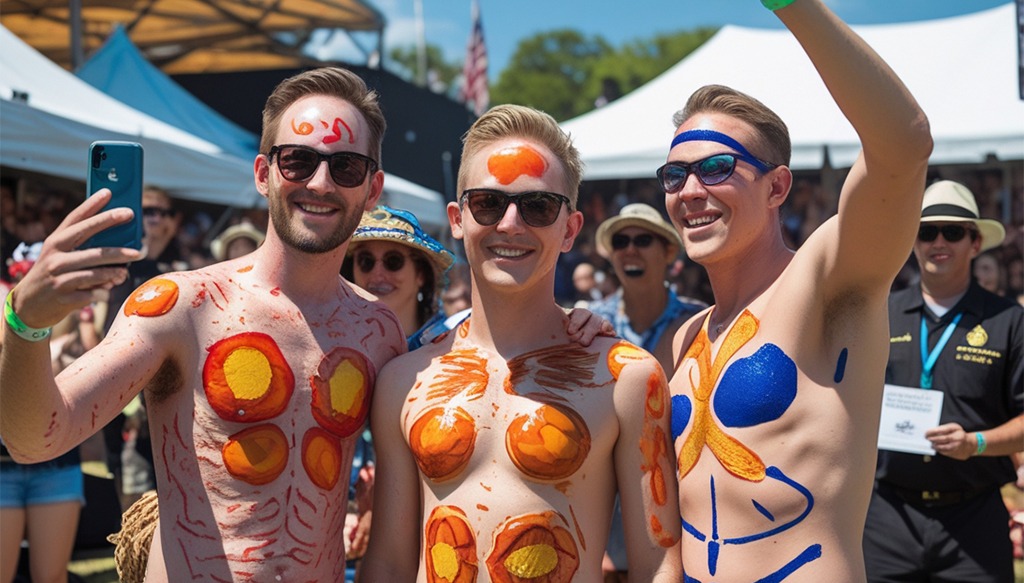
In what could be the most unusual and talked-about event of summer ۲۰۲۵, New Orleans became the backdrop for the wildly controversial yet oddly captivating “Sunburn Competition.” Set against the iconic Mississippi River shoreline, this cheeky festival combined satire, beach culture, and a bold statement about self-expression—through the art of sunburn.
The premise is simple but unconventional: participants compete by showcasing their most outrageous, painful, or creatively designed sunburns. From accidental lobster-red backs to intricate patterns crafted with sunscreen stencils and body paint, competitors pushed the boundaries of skin art.
Judges evaluated each entry based on originality, humor, and crowd reaction. It was less about perfection and more about boldness—whether that meant a perfectly framed sunburn tattoo or a hilariously uneven patch of redness.
Safety was a concern: While sunscreen use was optional, organizers made hydration stations and first aid tents mandatory, reminding everyone that the event was a satirical nod rather than an endorsement of reckless sun exposure.
New Orleans has long been a city embracing eccentric celebrations—from Mardi Gras parades to jazz festivals. The “Sunburn Competition” fits right in with the city’s love for daring, colorful, and provocative public gatherings that push social boundaries and challenge norms.
The festival captured local energy, blending humor with the region’s tropical heat and beach lifestyle. Participants ranged from sunburn veterans to first-timers eager to test the limits of their skin’s endurance.
Thousands flocked to the event—some sporting minimal clothing, others donning lobster costumes, and many flaunting their flaming red skin with pride. Social media exploded, especially TikTok and Instagram, where the hashtag #SunburnChallenge rapidly gained traction with millions of views.
Videos of outrageous sunburn art, creative stencils, and playful banter between contestants and the audience sparked viral memes and commentary worldwide. Local influencers and health experts joined the conversation, creating a complex buzz mixing entertainment and caution.
Despite the event’s comedic tone, dermatologists and public health officials raised serious concerns. Intentional sunburn is known to increase risks of skin cancer, premature aging, and long-term damage.
New Orleans health departments issued public reminders about the importance of sunscreen, proper hydration, and avoiding prolonged sun exposure. They applauded the satire but emphasized the line between humor and harmful behavior.

Event organizers described the competition as a form of “satirical performance art,” critiquing society’s obsession with beauty standards and tanning culture. By exaggerating sunburns, they aimed to spark dialogue about how far people go for appearance and viral fame.
However, critics labeled the event as reckless and irresponsible, warning it might encourage dangerous behavior among impressionable youth.
Regardless, the event successfully grabbed national headlines and sparked interest in similar sun-themed
satire festivals in other sunny cities
Suggested Place for the Sunburn Competition:
Bayou St. John Park, New Orleans
Bayou St. John Park offers a perfect blend of natural beauty, open green spaces, and proximity to the vibrant New Orleans community. With its scenic waterside setting and plenty of sunny spots, it creates a relaxed, festival-friendly atmosphere ideal for a sun-themed event. The park’s accessibility and established event facilities make it easy to set up hydration stations, first aid tents, and creative booths for sunscreen stencils and body painting.
Located away from the busiest tourist areas but still central enough to attract locals and visitors, Bayou St. John Park provides a safe, spacious, and picturesque environment for participants to showcase their sunburn art while enjoying the city’s unique culture and summer vibes.
Will the “Sunburn Competition” become a summer staple or a one-time oddity? Given its viral success and the city’s enthusiasm, it’s likely we’ll see more bold, boundary-pushing events that blend art, satire, and social commentary in unexpected ways.
New Orleans proved once again that it can turn even the strangest ideas into cultural phenomena—this
time with a bit of sun, satire, and sizzling fun
find mor strange summer travel idea here
Visible redness, irritation, and peeling after a long day in the sun might seem minor, but dermatologists warn that this reaction is actually a form of radiation injury. The skin’s exposure to ultraviolet (UV) rays, especially UVB, can cause cellular damage that leads to premature aging, discoloration, and in some cases, skin cancer.
So, what do experts recommend for avoiding and managing this condition effectively? And which products are trusted by professionals to help soothe and protect your skin?
According to the American Academy of Dermatology (AAD), overexposure to sunlight without protection can result in inflammation, swelling, pain, and even blistering. The reaction may start within ۱۵ minutes and peak after a full day. Though temporary, the cellular injury it causes is lasting.
The skin may present symptoms such as:
- Redness and warmth
- Swollen, painful areas
- Blisters
- Flaking or peeling
- In severe cases: chills, nausea, or fever
Even mild cases of skin inflammation due to sunlight can harm DNA in skin cells, increasing the long-term risk of developing melanoma and other forms of skin cancer.
Dr. Whitney Bowe, a board-certified dermatologist, highlights that excessive UV exposure is not just discomfort—it’s cumulative harm. “Your skin remembers every reaction you’ve had to the sun,” she explains. “Each incident contributes to cellular mutations.”
The Centers for Disease Control and Prevention (CDC) also emphasizes that more than five serious UV-related skin injuries over a lifetime can more than double your chance of developing melanoma, the most dangerous type of skin cancer.
Even when the visible symptoms fade, the underlying damage remains. This is why timely care and proper protection are crucial.
Myth ۱: It’s safe to be outside on a cloudy day
Fact: Up to ۸۰% of UV radiation still penetrates cloud cover.
Myth ۲: Only light-skinned people are affected
Fact: While lighter complexions react faster, UV rays can damage all skin tones.
Myth ۳: A tan protects you
Fact: A tan reflects skin’s defensive response to injury. It provides minimal protection and is not a substitute for proper care.
Experts recommend a simple five-step rule created by the Skin Cancer Foundation:
- Slip on protective clothing
- Slop on a broad-spectrum SPF ۳۰+ sunscreen
- Slap on a wide-brimmed hat
- Seek shade during peak sunlight hours (۱۰ AM – ۴ PM)
- Slide on UV-blocking sunglasses
The AAD further advises:
- Apply about one ounce of sunscreen for full-body coverage
- Reapply every two hours or after swimming/sweating
- Cover neglected areas like ears, neck, feet, and the scalp (if exposed)
If the skin has already reacted to UV rays, follow these evidence-backed tips to reduce discomfort and help recovery:
Immediately move indoors or under shelter to prevent worsening of the affected area.
Use cool (not icy) compresses or a gentle cold shower. Avoid hot water, which aggravates inflammation.
Drink plenty of water and electrolyte-rich fluids. Cellular repair requires moisture from the inside.
After bathing, apply a gentle, fragrance-free moisturizer. Look for:
- Aloe vera: reduces inflammation
- Soy extract: calms skin
- Colloidal oatmeal: soothes itchiness
- Ceramides: support barrier repair
NSAIDs like ibuprofen help decrease swelling and discomfort. Take them within the first ۲۴ hours for best results.
Avoid alcohol-based toners, physical scrubs, or perfumed lotions. Also skip makeup over the affected skin until healing starts.
You should see a healthcare provider if:
- The area affected is large or covers sensitive zones
- You develop symptoms like fever, dizziness, or vomiting
- Skin becomes severely swollen, forms pus, or smells foul
- Blisters form across wide regions
These may indicate sun poisoning, which is a more extreme systemic reaction.
According to dermatologists, the typical healing process can range from ۳ to ۱۰ days depending on the severity. Peeling usually begins around day ۴ or ۵. Do not pick at the skin, as this can cause scarring or infection.
Here are three dermatologist-endorsed skin care products widely available online that can help ease inflammation and promote healing after sun-related damage.

Why it works: Combines aloe vera and Vitamin E to cool the skin and replenish moisture lost during exposure.
- Lightweight and non-greasy
- Free of parabens and cruelty-free
- Has a subtle tropical scent
- Absorbs quickly and soothes instantly

Why it works: Developed by dermatologists, this cream restores the skin’s natural barrier with ceramides and locks in hydration.
- Non-comedogenic and unscented
- Contains hyaluronic acid for long-lasting moisture
- Safe for all ages and skin types
- Works for face and body

Why it works: Offers fast pain relief with lidocaine while cooling aloe soothes heat and inflammation.
- Easy-to-use spray for hard-to-reach areas
- Fast-acting relief without stickiness
- Excellent for back or shoulders
- Also works on insect bites and cuts
What many consider a mild reaction to a sunny day is actually the body’s response to cellular trauma. Medical experts stress that protecting your skin isn’t just about beauty—it’s about long-term health. Each exposure adds to the cumulative damage that can eventually lead to skin cancer.
So the next time you head outdoors, remember that protection is always easier than treatment. And if you’re already dealing with sun-exposed skin, act fast to cool, soothe, and moisturize.
Because your skin remembers everything—even if you don’t.








Leave a Reply