

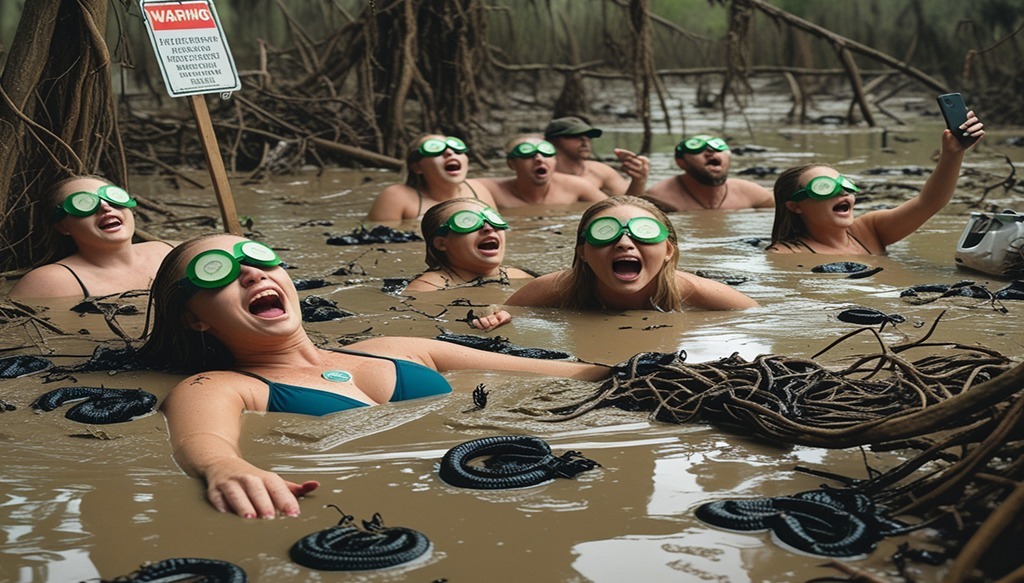
Mississippi’s latest wellness trend promised natural rejuvenation, but what it delivered was pure swampy madness. The “DIY Swamp Spa” craze exploded this summer after influencers claimed that soaking in the state’s muddy bayous cured everything from anxiety to acne. Naturally, a mud mask made from swamp soil was a key part of the ritual, believed to draw out toxins and spiritual impurities. But as crowds flooded the marshes, chaos followed.
What began as serene self-care spiraled into slippery scenes of screaming spa-goers. TikTok videos showed beauty influencers lounging in chest-high sludge, surrounded by mosquito clouds and questionable water creatures. Some even applied DIY cucumber masks before slipping face-first into mud puddles. The homemade mud mask application quickly turned from wellness to wildlife encounter.
“I thought I was exfoliating,” said a participant on TikTok, “but it turned into a leech facial and now I’m traumatized.”
Several spa sessions ended in unexpected mudslides as swamp banks gave way under the weight of ring lights and yoga mats. A viral clip captured one group sinking slowly into a marsh while attempting synchronized “zen chants.” Emergency services were called to extract a group stuck hip-deep for over an hour, many of whom still wore half-dried mud masks on their faces.
What fueled this madness? Social media. Wellness influencers, desperate for new trends, turned swamp-mudding into a badge of honor. From branded mud mask kits to affiliate links for biodegradable swimsuits, the market exploded. What was once a niche ritual became a full-blown aesthetic—until it backfired.
With the trend came trouble. Dozens of participants reported mysterious bites, skin infections, and in one case, an allergic reaction to mold inside a homemade mud mask. Several lawsuits are now in motion, with plaintiffs citing emotional distress, medical expenses, and social embarrassment.
Local officials issued a warning urging residents to avoid “unregulated spa activities” in protected wetland areas. “The mud is not sterile,” one ranger clarified. “Also, it’s full of wildlife—some of which bites.” A temporary ban on organized swamp gatherings was put into place. Rangers confiscated makeshift mud kits and signs reading “Free Mud Masks, Natural Detox.”
Medical professionals warn that using non-sterile swamp mud as a mud mask can lead to fungal infections, clogged pores, and worse. “Mud masks should come from regulated sources,” said Dr. Tammy Lang of Mississippi SkinSafe. “Not the bottom of a mosquito nest.”
Though the trend has sparked memes, lawsuits, and mosquito-related PTSD, many still defend it as “earth’s way of healing us.” Meanwhile, dermatologists are pleading with people to use SPF, not swamp water. Some influencers are reportedly pivoting to dry-sand therapy in Arizona.
This summer’s mud mask craze offers a cautionary tale about the power of trends. What began as a playful return to nature morphed into a national news headline. The moral? Not everything organic is good for your face.
With lawsuits underway and bans in place, the swamp spa wave is receding. However, brands are now racing to sell safer mud mask alternatives that mimic the Mississippi marsh look—minus the leeches. And influencers? They’ve already moved on to “bee sting facials” and “cactus meditation.” The cycle continues.
Tags: swamp spa trend, Mississippi summer ۲۰۲۵, DIY beauty fails, mud mask, bizarre wellness craze, mud bath gone wrong, leeches and influencers, southern summer disasters, viral TikTok spa trend, outdoor spa fail, natural spa chaos, extreme wellness trend, weird summer fads, spa disaster zone, influencer marsh meltdown, leech lawsuits,







Leave a Reply