

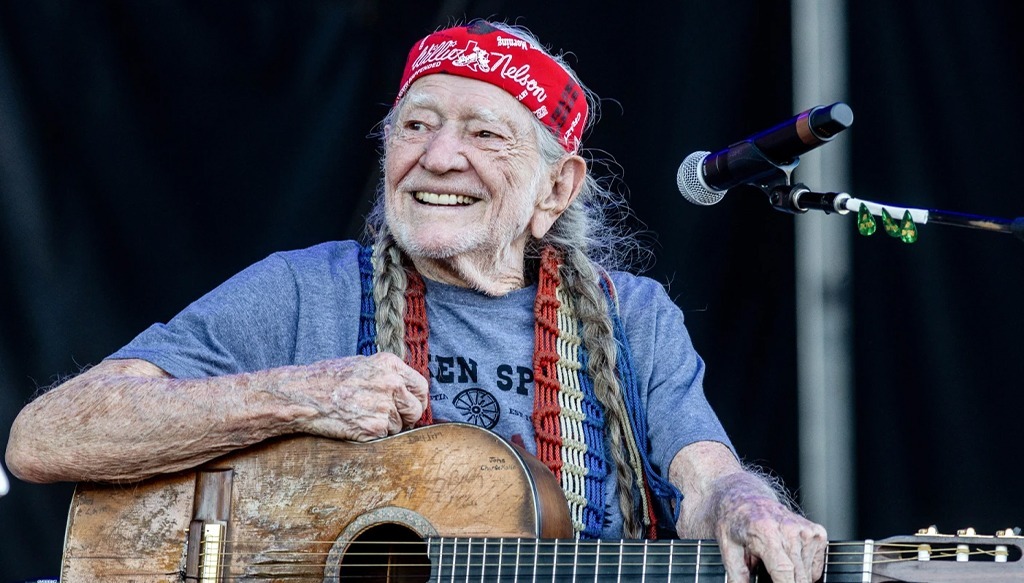
Few figures in American music embody the spirit of independence, rebellion, and heartfelt storytelling as completely as Willie Nelson. With a career spanning more than seven decades, Nelson has become a cornerstone not only of country music but of American cultural life. His unique voice, songwriting genius, dedication to social causes, and refusal to conform have earned him a place as one of the most respected and beloved figures in music history.
This essay explores the journey of Willie Nelson from a small-town boy in Texas to an international icon, focusing on his early life, musical innovations, activism, personal challenges, and lasting impact on culture and music.
Willie Hugh Nelson was born on April ۲۹, ۱۹۳۳, in the rural town of Abbott, Texas. Born during the Great Depression, his early years were shaped by economic hardship and the rural working-class culture of the American South. His parents divorced when he was young, and he and his sister Bobbie Nelson, who would become his lifelong musical partner, were raised by their grandparents.
Willie received his first guitar at the age of six, and by seven, he had written his first song. Growing up in a deeply religious household, he and Bobbie played gospel music at their local church, where they developed a strong foundation in music. Willie also listened to blues, jazz, and Western swing, shaping the eclectic musical style he would later become famous for.
After high school, Nelson briefly joined the U.S. Air Force but was medically discharged due to back problems. He then enrolled at Baylor University but dropped out to pursue music full-time, working as a DJ and performing in local bars and clubs across Texas.
Nashville and the Struggles of a Songwriter
In the ۱۹۵۰s, Nelson moved to Nashville, Tennessee, the heart of the country music industry. Although he faced numerous rejections as a performer, he quickly found success as a songwriter. His compositions were deeply emotional and rich with narrative. Several of his songs became massive hits for other artists, including:
- “Crazy”, famously performed by Patsy Cline—a timeless classic and one of the most played jukebox songs in history.
- “Hello Walls”, a major hit for Faron Young.
- “Funny How Time Slips Away”, recorded by artists across genres, from Elvis Presley to Al Green.
- “Night Life”, recorded by Ray Price and B.B. King, among others.
Despite these songwriting achievements, Nelson struggled to establish himself as a recording artist. The Nashville sound, with its lush orchestrations and polished production, clashed with Nelson’s more raw and natural musical instincts. Frustrated by the constraints of the industry, Nelson began seeking a new direction.
In the late ۱۹۶۰s and early ۱۹۷۰s, Nelson returned to Texas, settling in Austin, which was becoming a hub for a more eclectic and progressive brand of country music. Here, Nelson found a welcoming audience among hippies, cowboys, and musicians alike. He began performing in a freer, more expressive style that blended country, blues, jazz, and folk.
Alongside fellow artists like Waylon Jennings, Kris Kristofferson, and Johnny Cash, Nelson became a leader in what became known as Outlaw Country. This movement rebelled against the polished, formulaic Nashville model, embracing a rougher, more honest sound.
Nelson’s ۱۹۷۳ album “Shotgun Willie” marked the beginning of this new phase. Although not a major commercial hit, it signaled a shift in his artistry and reputation. His ۱۹۷۵ album “Red Headed Stranger”, however, was a landmark. The minimalist production and deeply emotional storytelling won over critics and fans alike. The hit single “Blue Eyes Crying in the Rain” became his first No. ۱ as a singer and earned him a Grammy Award.
With “Red Headed Stranger,” Nelson proved that success could be achieved on his own terms, outside of Nashville’s control. The album cemented his image as a musical outlaw—a figure deeply respected for his authenticity and innovation.
As Nelson’s fame grew in the late ۱۹۷۰s and ۱۹۸۰s, he continued to push musical boundaries. In ۱۹۷۸, he released “Stardust”, a collection of American pop standards like “Georgia on My Mind” and “Blue Skies.” Produced by Booker T. Jones, the album was a bold departure from country norms but became one of Nelson’s best-selling and most enduring records.
He also collaborated with other artists frequently, showcasing his versatility and collaborative spirit. Notable projects included:
- “Pancho and Lefty” (۱۹۸۳) with Merle Haggard.
- Joining The Highwaymen, a supergroup with Johnny Cash, Waylon Jennings, and Kris Kristofferson.
- Collaborations with Ray Charles, Bob Dylan, and Norah Jones.
Nelson’s unique guitar style, played on his beloved and battered Martin guitar “Trigger,” combined jazz phrasing, bluesy licks, and country picking. His nasal voice and offbeat phrasing became instantly recognizable hallmarks of his style.
Personal Challenges and Resilience
Despite his musical success, Nelson faced serious personal and financial challenges. In ۱۹۹۰, the Internal Revenue Service (IRS) seized most of his assets, claiming he owed over $۱۶ million in back taxes. The debt stemmed from bad investments and poor financial advice, rather than personal extravagance.
Rather than retreat from the public eye, Nelson responded creatively. He released “The IRS Tapes: Who’ll Buy My Memories?”, an album sold directly to fans to help pay off his debts. He also made appearances in commercials and kept touring extensively. His fans stood by him, and by ۱۹۹۳, he had settled with the IRS.
This chapter in his life showcased Nelson’s humility, humor, and perseverance. He turned a potentially career-ending disaster into an opportunity to connect more deeply with his audience.
Activism and Humanitarian Work
Willie Nelson’s contributions go far beyond music. He is widely respected for his activism and social engagement, particularly in the areas of agriculture, environmentalism, and civil liberties.
In ۱۹۸۵, Nelson co-founded Farm Aid with Neil Young and John Mellencamp to raise awareness about the crisis facing family farmers in America. The first Farm Aid concert raised over $۹ million. Since then, the organization has raised tens of millions and continues to support sustainable farming and rural communities.
Nelson has been one of the most visible advocates for marijuana legalization. A lifelong user and proponent of cannabis, he launched his own brand, Willie’s Reserve, to support legal, regulated marijuana businesses. He has often spoken about the medicinal, economic, and social justice aspects of legalization.
Environmental and Civil Rights Causes
Nelson is a strong advocate for environmental sustainability. He promoted biofuels through his brand BioWillie, which used vegetable oil to power diesel engines. He also supports animal welfare, LGBTQ+ rights, and peaceful diplomacy over war, reflecting his broad humanitarian values.
Personal Life and Philosophy
Willie Nelson has been married four times and has eight children. His children, including Lukas Nelson, have followed in his musical footsteps. Despite a sometimes turbulent personal life, Nelson is known for his loyalty to friends and his calm, philosophical demeanor.
He has written several books, including It’s a Long Story: My Life and Roll Me Up and Smoke Me When I Die, in which he shares his reflections on life, music, and mortality. A follower of Buddhism, Taoism, and Christianity, Nelson often emphasizes forgiveness, compassion, and inner peace.
Willie is also known for his sense of humor and light-heartedness. Whether cracking jokes in interviews or appearing in films like “The Dukes of Hazzard” and “Honeysuckle Rose,” he has never taken fame too seriously.
Willie Nelson’s influence on American music is immeasurable. He has released over ۷۰ studio albums, won multiple Grammy Awards, and was inducted into the Country Music Hall of Fame in ۱۹۹۳. In ۲۰۲۳, he was also inducted into the Rock and Roll Hall of Fame, an acknowledgment of his genre-defying artistry.
His legacy extends beyond awards:
- Musically, he broke down the walls between country, rock, jazz, and pop.
- Culturally, he became a unifying figure, beloved by hippies and cowboys, Democrats and Republicans, old-timers and young rebels.
- Socially, he used his platform to fight for justice, equity, and sustainability.
Even into his ۹۰s, Nelson continues to tour, record, and inspire. His resilience and longevity speak to a life lived with passion and integrity.
The Timeless Spirit of Willie Nelson
Willie Nelson is not just a country music legend—he is an enduring American icon. His story is one of perseverance, reinvention, and unwavering authenticity. From his roots in small-town Texas to international acclaim, from IRS troubles to philanthropic triumphs, from outlaw rebel to elder statesman, Nelson’s journey encapsulates the richness of the American experience.
Through it all, Nelson has remained true to his core values: love, honesty, freedom, and compassion. Whether singing a heartbreak ballad, advocating for family farmers, or lighting a joint on his tour bus, he continues to live life on his own terms.
In a world often dominated by fleeting fame and commercial conformity, Willie Nelson stands as a beacon of artistic integrity, social consciousness, and human warmth. His songs will echo for generations, and his example will inspire countless others to stay true to themselves, no matter the odds.








Leave a Reply